Affiliate Disclosure: This post contains affiliate links. If you make a purchase through a link on this site, Simple Steps Press may earn a commission at no additional cost to you. We only recommend products we believe add genuine value to our readers.
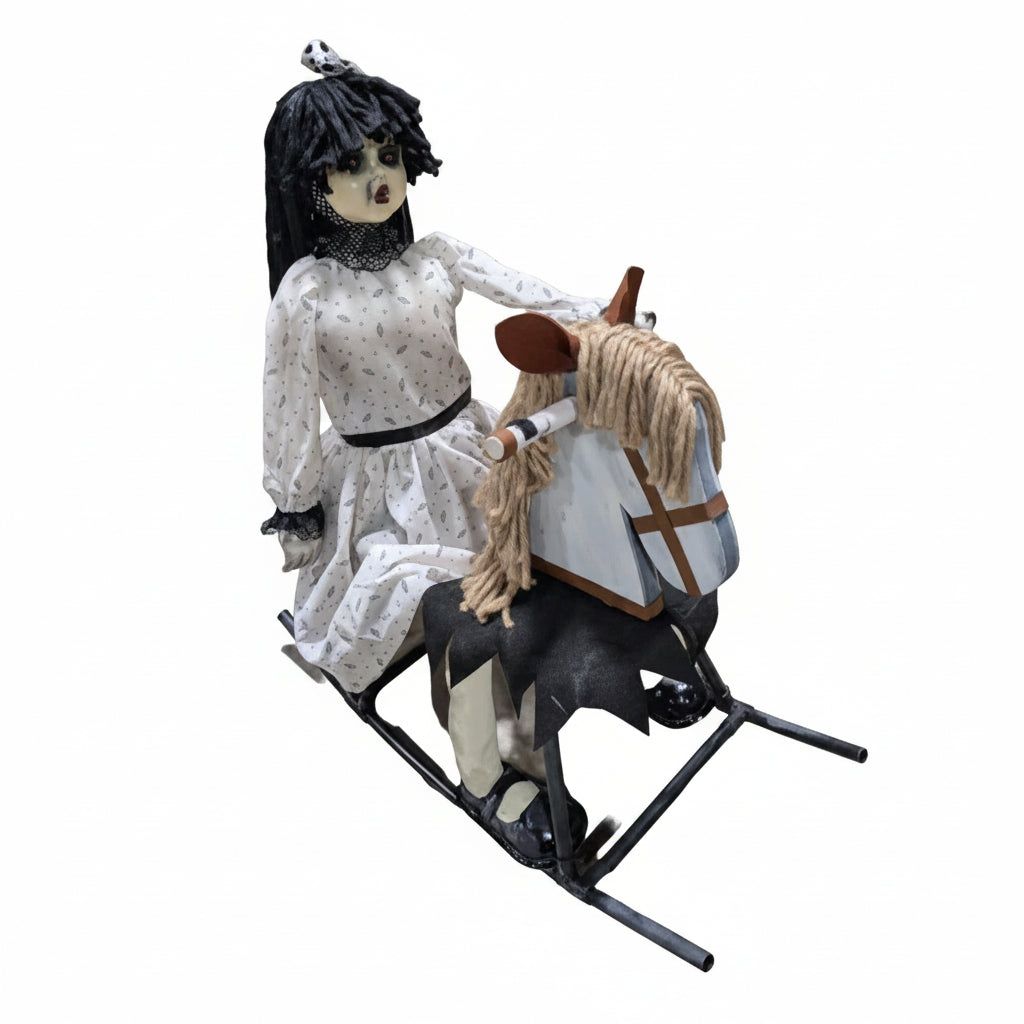
Check out 28″ Animated Rocking Horse With Doll →
Creating an unsettling atmosphere doesn’t require buckets of fake blood or graphic imagery. Some of the most effective haunted displays rely on subtle psychological triggers—things that feel “off” rather than overtly violent. Creepy doll décor sits squarely in this sweet spot, offering genuine eeriness while remaining appropriate for trick-or-treaters of all ages and neighborhood standards that discourage graphic content.
The key is understanding what makes dolls unsettling in the first place, then amplifying those elements through strategic placement, lighting, and motion without crossing into territory that frightens young children or violates community guidelines. This approach works beautifully for front-yard haunts, indoor party spaces, cosplay photo backgrounds, or theatrical productions where you need “creepy” without “nightmare-inducing.”
Why Dolls Work as Psychological Horror Props
Dolls trigger what researchers call the “uncanny valley”—that uncomfortable feeling when something looks almost human but not quite right. Their frozen expressions, glassy eyes, and child-like features create cognitive dissonance when placed in unexpected contexts or given unsettling characteristics. A doll sitting motionless in a rocking chair reads as “wrong” to our pattern-recognition systems without requiring any explicit threat or violence.
This makes them ideal for family-friendly haunts. Parents appreciate that you can achieve genuine atmosphere without exposing their six-year-old to imagery they’ll need weeks to process. Older children and teens still find them effectively creepy—the psychological impact works across age ranges when executed properly.
Animated pieces amplify this effect significantly. The 28″ Animated Rocking Horse With Doll listed by Abracadabra NYC demonstrates this principle perfectly—the combination of gentle rocking motion with a child-sized doll creates an eerie “abandoned nursery” vibe that unsettles viewers without graphic content. The scale (28 inches) makes it substantial enough to serve as a focal point without overwhelming smaller spaces.
Placement Strategies for Maximum Impact
Strategic positioning transforms a simple prop into an effective scene element. Consider these approaches based on your space and audience:
- Window displays: Position animated dolls where they’re visible from the street but partially obscured by curtains. The glimpse-and-hide effect creates uncertainty—viewers aren’t sure what they saw or whether it moved. This works especially well with motion-activated pieces that only animate when someone approaches.
- Unexpected domestic settings: Place dolls in furniture or locations where you’d normally find people—sitting at a dining table with a tea set, perched on a porch swing, positioned in a child’s wagon. The juxtaposition of innocent object with human-occupied space amplifies the uncanny effect.
- Grouped arrangements: Multiple dolls create a more powerful impact than singles. Arrange three to five dolls facing the same direction (toward your front door or main walkway) for a coordinated “watching” effect that builds tension as visitors approach.
- Elevated positions: Dolls placed on mantels, shelves, or atop furniture create a “looking down” perspective that adds to the surveillance feeling. This positioning also protects them from younger children who might be tempted to touch.
For pieces like rocking-horse setups, corner placement works particularly well. The angle allows visibility from multiple approach vectors while the walls behind create acoustic reflection that makes any sound effects or mechanical noise more noticeable. This positioning also provides clearance for the rocking motion without requiring excessive floor space.
Lighting and Atmosphere Building
Lighting transforms creepy doll displays from merely odd to genuinely unsettling. Harsh overhead lighting diminishes the effect—you want shadows, contrast, and selective illumination that creates depth and hides details.
Uplighting from floor-level LED spotlights casts unnatural shadows on doll faces, emphasizing their frozen expressions and creating the illusion of hollow eye sockets. Position lights 2-3 feet in front of your display, angled upward at roughly 45 degrees. Cool-white or pale-blue LEDs create a moonlit effect; amber creates a dusty-attic atmosphere. Avoid red or green unless you’re specifically going for a carnival/circus theme—those colors push displays toward comic territory rather than unsettling.
Flickering effects add significant impact for animated pieces. A slowly pulsing light (not rapid strobing, which can trigger seizures) suggests electrical problems or supernatural interference. Battery-operated LED candles with built-in flicker modes work well for this—position them near but not directly on the prop to create dancing shadows.
Check out 28″ Animated Rocking Horse With Doll →
For indoor displays, blackout curtains or dark fabric backdrops eliminate competing light sources and focus attention on your lit elements. This controlled environment allows you to direct exactly where viewers look and prevents ambient light from diminishing your carefully crafted shadows.
Sound Design for Psychological Impact
Audio completes the atmosphere. Many animated props include built-in sound effects, but you can enhance or supplement these with environmental audio:
- Music box melodies: Simple, repetitive tunes played at slightly wrong speed (slower than normal) create instant unease. Let the melody play incompletely—stop it mid-phrase rather than completing the musical pattern.
- Creaking and settling sounds: Old floor creaks, rope tension sounds, or gentle rocking-chair squeaks suggest presence without explicit threat. These environmental sounds feel organic rather than obviously “added,” maintaining immersion.
- Distant laughter or whispers: Keep volume very low—barely audible. Visitors should question whether they actually heard something. This uncertainty amplifies the psychological impact far more than obvious, loud effects.
- Silence: Don’t underestimate deliberate quiet. Long pauses between sounds create tension and make visitors hyperaware of every small noise. A motion-activated sound that triggers only occasionally will seem more “real” than constant audio loops.
For rocking-horse displays specifically, the natural creaking of the rocking mechanism provides organic sound. Resist the urge to mask it with music—that mechanical rhythm creates its own unsettling cadence, especially when it starts unexpectedly or continues longer than visitors expect.
Maintenance and Storage Considerations
Animated props require more care than static decorations. Check mechanical components weekly during display season—rocking mechanisms, motor assemblies, and any moving parts need periodic inspection to ensure smooth operation. Listen for grinding sounds or resistance that might indicate worn components or obstructions.
Clean porcelain or plastic doll faces with slightly damp microfiber cloths—avoid harsh chemicals that might damage paint or weathering effects. Many creepy dolls are deliberately aged or distressed; you want to preserve that aesthetic rather than scrubbing it away. Test any cleaning product on an inconspicuous area first.
For storage, protect moving parts from dust and moisture. Wrap mechanical assemblies in clean cloth before boxing, and store props in climate-controlled spaces when possible. Extreme temperature fluctuations can damage motors, crack plastic components, or deteriorate fabric elements. Original packaging provides ideal protection if you’ve kept it; otherwise, use appropriately sized boxes with adequate padding to prevent shifting during storage.
Remove batteries from any battery-operated props before long-term storage to prevent corrosion. Label storage boxes clearly with contents and any assembly notes—you’ll thank yourself next season when you’re not trying to remember which power adapter goes with which prop.
Building Multi-Year Display Collections
Effective haunts evolve over time. Start with one or two quality animated pieces like a rocking-horse setup, then add complementary elements in subsequent seasons. This approach spreads costs while allowing you to refine your aesthetic and learn what resonates with your specific audience and space.
Document your displays photographically each year. These references help you remember what worked, what didn’t, and how you achieved particular effects. Note placement, lighting angles, and any technical issues you encountered—this archive becomes invaluable planning material for future seasons.
Quality pieces justify their investment through repeated use. A well-maintained animated prop provides 5-10 years of service, making the per-season cost quite reasonable compared to disposable decorations. Factor longevity into purchasing decisions—paying more initially for better construction and materials typically proves more economical than replacing cheaper items every few years.
The beauty of psychological horror décor lies in its flexibility and appropriateness across contexts. The same setup that unsettles teenagers on Halloween night can serve as conversation-piece décor for an adult costume party or provide atmospheric background for cosplay photography. By focusing on suggestive rather than explicit imagery, you create displays that work for multiple audiences and occasions while maintaining genuine impact where it counts—in the uncomfortable space between familiar and foreign that makes us question what we’re really seeing.